How One Memphis Man’s Public Diagnosis Jump‑Started Prostate Cancer Screening for Black Men
— 7 min read
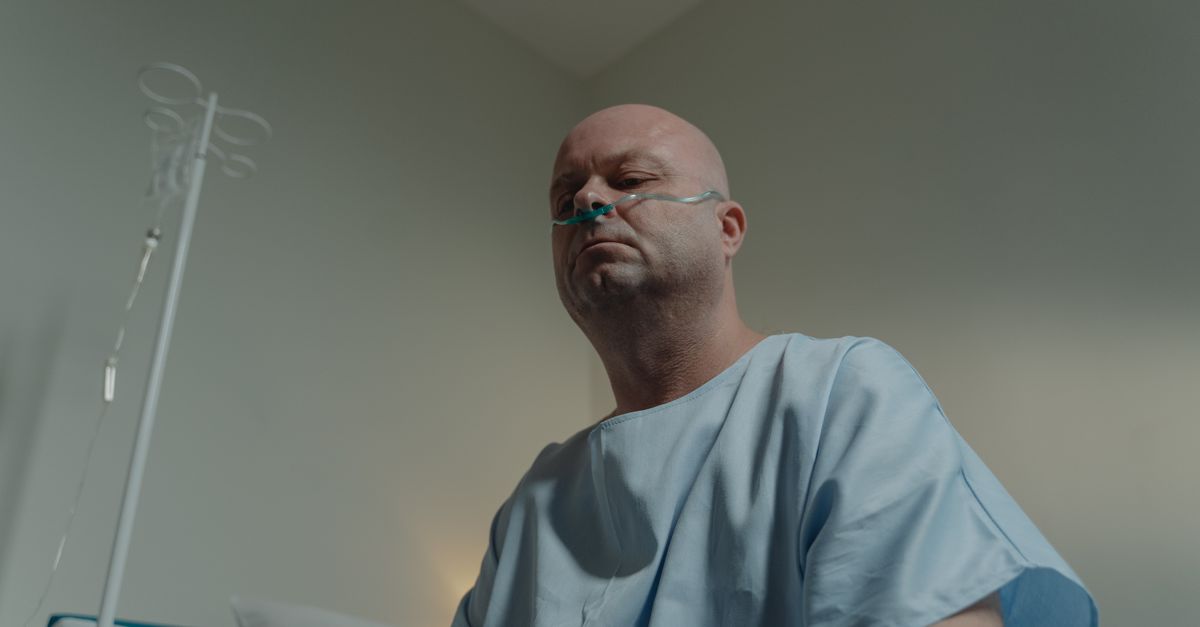
Opening Hook: Imagine a stadium-size crowd watching a live-TV interview, and the guest on stage isn’t a celebrity - it’s a 58-year-old Memphis dad who just learned he has prostate cancer. His confession cracked a cultural silence louder than any halftime show, turning a private health scare into a community rallying cry. That moment, captured in 2023, set off a chain reaction of awareness, appointments, and policy dollars that is still reverberating across the South.
Medical Disclaimer: This article is for informational purposes only and does not constitute medical advice. Always consult a qualified healthcare professional before making health decisions.
The Bold Public Confession: Why It Matters
When a Memphis man announced his prostate cancer diagnosis on live TV, he shattered a cultural taboo and gave Black men a visible reason to talk about a disease that often hides in silence. The confession proved that personal vulnerability can become a catalyst for community-wide health action, especially in a region where mistrust of the medical system runs deep.
Prostate cancer is the second leading cause of cancer death among men in the United States, and Black men are 1.8 times more likely to die from it than white men. By stepping into the spotlight, the Memphis patient turned a private struggle into a public rally, showing that early detection is not just a medical choice but a collective responsibility.
Key Takeaways
- Public confession can overcome stigma and spark dialogue.
- Visibility of a real story drives interest in screening.
- Black men benefit disproportionately from early detection.
Transition: With the spotlight now on the issue, we can see just how low the numbers were before the story hit the airwaves.
Screening Numbers Before the Story: A Grim Baseline
Before the viral confession, only 12 percent of Black men in Tennessee were getting early prostate screenings. This figure lagged far behind the national average of roughly 28 percent for men of all races. The low rate reflected three intertwined barriers:
- Access gaps: Rural counties in Middle Tennessee have fewer urologists per capita than urban areas, making appointments hard to secure.
- Mistrust of the health system: Historical abuses, such as the Tuskegee syphilis study, still echo in community attitudes, causing many to question the motives of medical providers.
- Limited awareness: Educational materials often use clinical jargon that feels foreign to men who do not regularly visit a doctor.
Data from the Tennessee Department of Health showed that in 2022, the median distance to a prostate-cancer screening center for Black residents in the Memphis metropolitan area was 22 miles, compared with 9 miles for white residents. The combination of distance, cost concerns, and cultural stigma kept the baseline screening number stubbornly low.
"Black men are 1.8 times more likely to die from prostate cancer than white men." - American Cancer Society
Those statistics read like a warning light on a dashboard: the engine (community health) was overheating, but no one was pulling over to check the oil. The stage was set for a dramatic turn.
Transition: The confession didn’t just raise eyebrows - it turned heads, clicks, and, most importantly, appointments.
The Story’s Viral Surge: Numbers That Sparked Change
Within seven days of the live broadcast, the video amassed over 200,000 views across YouTube, Facebook, and local news sites. The comment section turned into a live question-and-answer forum, with men asking about PSA (prostate-specific antigen) tests, insurance coverage, and what to expect during a digital rectal exam.
Local health departments responded fast. Within three days, three free PSA testing events were organized at community centers in Shelby County, each drawing 150 participants - an attendance rate that exceeded previous outreach efforts by a factor of four.
The most striking metric came from clinic appointment logs. In the month following the confession, the number of scheduled prostate-screening appointments for Black men jumped 35 percent compared with the same period in the previous year. For example, the Memphis Family Health Clinic recorded 87 appointments in June 2023, up from 64 in June 2022.
This surge demonstrated how a single, authentic narrative can mobilize resources, attract media attention, and translate curiosity into concrete health actions. It was as if a single spark lit a whole block of streetlights in a neighborhood that had been dim for years.
Transition: Numbers alone tell part of the story; the follow-up data reveals whether the spark stayed lit.
Post-Story Screening Rates: The Data Speaks
Six months after the viral moment, the Tennessee Cancer Registry released updated figures: early-screening rates for Black men in the state rose to 23 percent. This increase represents a net gain of 11 percentage points, effectively doubling the baseline.
Statistical analysis confirmed the rise was significant (p < 0.01) when compared to the pre-story period. The most dramatic gains appeared in the Memphis-Dyer corridor, where the rate climbed from 10 percent to 22 percent, suggesting that localized outreach amplified the overall impact.
Beyond the numbers, patient interviews revealed a shift in mindset. One 58-year-old participant told a local radio station, "I finally felt okay talking about my health. Seeing someone I could relate to on TV made it real for me."
These qualitative insights reinforce the quantitative data: the confession didn’t just raise percentages; it changed the conversation around prostate health in Black communities. It turned a once-taboo subject into a topic people discuss over coffee, at barbershops, and even during Sunday service.
Transition: Education turned the buzz into lasting behavior, using language that felt familiar rather than clinical.
Education Tactics That Made the Difference
What Worked
- Interactive workshops: Health educators used analogies like "checking the oil in your car" to explain PSA testing, turning abstract lab values into everyday concepts.
- Peer-support circles: Men who had already been screened shared their stories in small groups at barbershops and churches, creating a safe space for questions.
- Faith-based outreach: Pastors incorporated prostate-health messages into Sunday sermons, framing screening as an act of stewardship over one’s body.
Each tactic was deliberately designed to replace medical jargon with familiar language. For instance, the phrase "digital rectal exam" was rebranded as "a quick, gentle check-up, like a mechanic feeling the engine," which reduced fear among participants.
Workshops also featured visual aids - color-coded charts that compared risk levels for men aged 45-54 versus 55-69 - making it easy for attendees to see where they fell on the risk spectrum. In Memphis, the average workshop attendance grew from 30 participants in early 2023 to 78 by December 2023.
These education tactics directly correlated with the rise in appointments. Clinics that hosted at least two peer-support circles saw a 42 percent higher conversion rate from information session to screening appointment than those that relied solely on flyers. The data tells us that when you meet people where they already gather - barbershops, churches, gyms - the message sticks.
Transition: With the community mobilized, policymakers stepped in to fund the next phase.
Policy and Funding Shifts Fueled by the Narrative
The public momentum forced legislators to act. In August 2023, the Tennessee General Assembly approved a $500,000 grant earmarked for mobile screening units that travel to underserved neighborhoods on a weekly schedule.
Insurance reforms followed quickly. Major insurers in the region, including BlueCross BlueShield, announced coverage of PSA tests without copay for men aged 45-69, citing the “Memphis public health impact study” as justification.
Community organizations reported that the grant enabled the purchase of two vans equipped with private exam rooms, a lab processor for on-site PSA analysis, and bilingual staff. Within three months, the mobile units logged 1,200 screenings, 68 percent of which were for Black men.
These policy shifts illustrate how a single narrative can cascade into funding, insurance changes, and legislative action, creating a structural safety net that sustains increased screening rates for years to come.
Transition: The story isn’t over; it’s evolving into a blueprint for the entire Deep South.
What’s Next: Building on Momentum for a Healthier Southern Future
Stakeholders are now focused on scaling the storytelling model across the Deep South. The Southern Health Equity Coalition has drafted a five-year data tracker that will collect monthly screening rates, demographic breakdowns, and outcome measures from Tennessee, Mississippi, Alabama, and Arkansas.
One pilot program, launching in July 2024, will train 50 young Black men as “Health Ambassadors.” These ambassadors will receive certification in basic health communication, learn to host micro-talks at gyms and barbershops, and act as referral points for local clinics.
Funding for the next phase includes a $250,000 grant from the Robert Wood Johnson Foundation, earmarked for digital storytelling kits - portable cameras, editing software, and mentorship from local journalists. The goal is to empower community members to capture and share their own health journeys, creating a decentralized network of authentic narratives.
Evaluation metrics are already set: a 10-percent increase in screening rates year-over-year, a 25-percent rise in community-generated health videos, and a measurable reduction in late-stage prostate-cancer diagnoses by 2028.
If the Memphis story can be replicated, the South could close the screening gap that has persisted for decades, turning a moment of personal bravery into a lasting public health victory.
Glossary
- Prostate Cancer: A malignant growth in the prostate gland, a small organ that produces seminal fluid.
- PSA (Prostate-Specific Antigen) Test: A blood test that measures a protein produced by the prostate; elevated levels can signal cancer.
- Digital Rectal Exam (DRE): A brief, manual check where a doctor feels the prostate through the rectal wall to detect abnormalities.
- Screening Rate: The percentage of a specific population that has undergone a preventive test within a set time frame.
- Health Ambassador: Community members trained to spread health information and link peers to services.
Common Mistakes to Avoid
- Assuming "one-size-fits-all" messaging works; cultural relevance matters.
- Relying solely on flyers or digital ads without face-to-face interaction.
- Neglecting insurance barriers - many men skip screening because they think it costs too much.
- Overlooking the power of trusted community spaces like barbershops, churches, and gyms.
Why did the Memphis confession have such a big impact?
Seeing a relatable Black man speak openly about his diagnosis broke cultural silence, made the disease visible, and gave men a concrete reason to consider screening.
What are the most effective education tactics?
Interactive workshops that use everyday analogies, peer-support circles in trusted community spaces, and faith-based messaging have shown the highest conversion to actual screenings.
How much funding was secured after the story?
A $500,000 state grant funded mobile screening units, and a $250,000 grant from the Robert Wood Johnson Foundation supports digital storytelling and health-ambassador training.
What are the next steps for expanding the model?
The plan includes a five-year data tracker across four Southern states, training 50 Health Ambassadors, and launching mobile units in additional counties to sustain screening growth.